


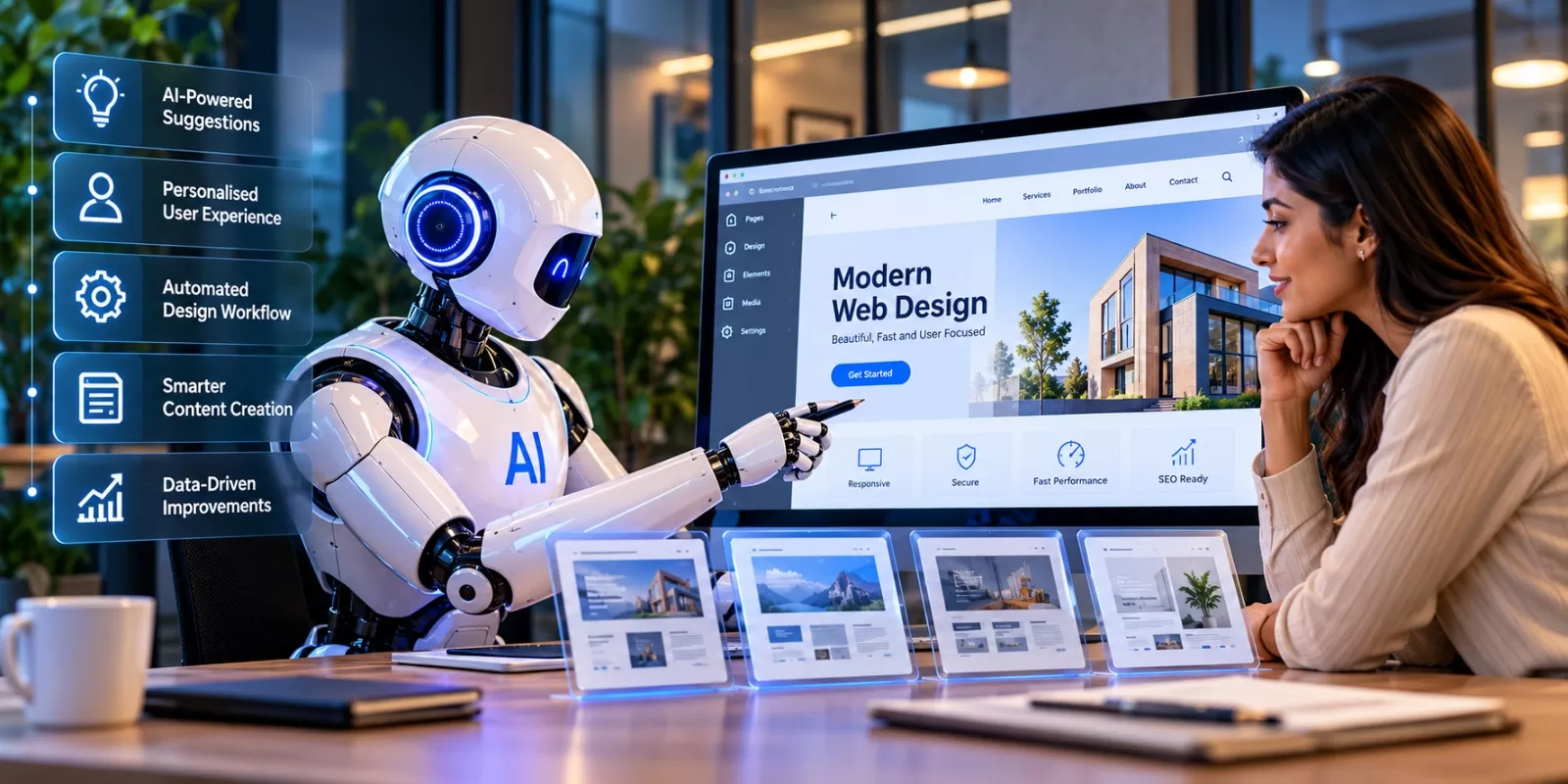
Website design used to revolve mainly around colours, layouts, images and navigation.
Those elements still matter, but modern websites are becoming much more connected to technology behind the scenes. AI and automation are influencing how websites are planned, personalised, maintained and experienced by users.
For a Web Design Company India, this shift creates both opportunities and new responsibilities. Technology can make websites more efficient, but it still needs to serve a clear human purpose.
AI Is Changing the Design Process
AI tools can help designers explore ideas more quickly.
A team can use AI to brainstorm layouts, generate design concepts, organise content or identify potential user journeys. This can reduce the time spent on repetitive early-stage tasks.
However, AI-generated concepts still need human judgement.
A design that looks impressive in isolation may not make sense for a particular audience. Designers need to consider branding, accessibility, navigation, business objectives and the actual behaviour of customers.
Personalised Website Experiences
Not every visitor arrives with the same needs.
AI and automation can help businesses create more relevant experiences based on factors such as previous interactions, product interests or customer behaviour.
For example, an e-commerce website may recommend products based on browsing activity, while a service website could present relevant resources depending on the visitor’s interests.
Personalisation should be useful rather than intrusive. Customers should still feel that they are in control of their experience.
Chatbots and Automated Assistance
Automated chat tools are becoming common across business websites.
A chatbot can answer frequently asked questions, direct visitors to relevant pages, collect basic enquiry details or help customers find information outside normal business hours.
The best implementations do not try to pretend that automation is a human representative.
Instead, they make it clear when automated assistance is being used and provide an easy path to human support when the question requires it.
Smarter Content Management
AI can also assist website teams with content management.
Businesses may use automation to organise content, identify outdated information, create internal content suggestions or assist with basic editorial workflows.
But automated publishing needs oversight.
Content should still be checked for accuracy, relevance, brand consistency and usefulness before it reaches customers.
Faster Website Testing
One of the less obvious benefits of AI and automation is the ability to analyse user behaviour at scale.
Businesses can review patterns in navigation, forms, clicks and conversions to identify where visitors may be experiencing difficulties.
For example, if a large number of visitors consistently abandon a particular form field, that may indicate an unnecessary obstacle.
Design teams can use these insights to test improvements rather than relying solely on assumptions.
Accessibility Should Not Be Forgotten
Technology should make websites easier to use, not create additional barriers.
AI-assisted tools can help identify potential accessibility issues, but automated checks are not a replacement for thoughtful design.
Readable text, logical navigation, keyboard accessibility, descriptive labels and appropriate colour contrast should remain part of the development process.
Performance Still Matters
No amount of AI functionality can compensate for a website that is painfully slow.
Businesses need to consider whether additional scripts, chat tools, tracking systems and personalised features are genuinely worth their performance cost.
Modern web design therefore requires balance. The goal is not to add technology simply because it is available.
The goal is to use technology where it improves the customer experience.
Security and Privacy Become More Important
Greater automation also means businesses need to think carefully about data.
If a website collects customer information to personalise experiences or power automated services, businesses need appropriate security and privacy practices.
Transparency matters too. Customers should understand how their information is being used.
What Will Modern Websites Look Like?
The future of web design is unlikely to be about replacing designers with AI.
Instead, AI and automation are more likely to become tools that help designers and developers work faster, test ideas and understand customer behaviour.
Human judgement remains essential for decisions involving brand identity, accessibility, trust and customer experience.
For businesses in India, the opportunity is to build websites that are not only visually modern but also useful, adaptable and connected to wider digital operations.
The strongest websites will not necessarily be those with the most AI features. They will be the ones where technology quietly makes the customer’s experience better.
That is the real direction of modern web design: less unnecessary complexity, more useful interaction, and technology working in the background to support the people using the website.
-
Previous Post
Best Do-Follow India Listing Sites for SEO and Backlinks
Related Posts
Web Design Company India Shares Key Website Trends Shaping Indian Businesses
A business website used to be little more than an online brochure. Today, it…

Why Global Businesses Are Choosing Web Development Companies in India
A business can have a brilliant idea, strong branding and a great product, but…