


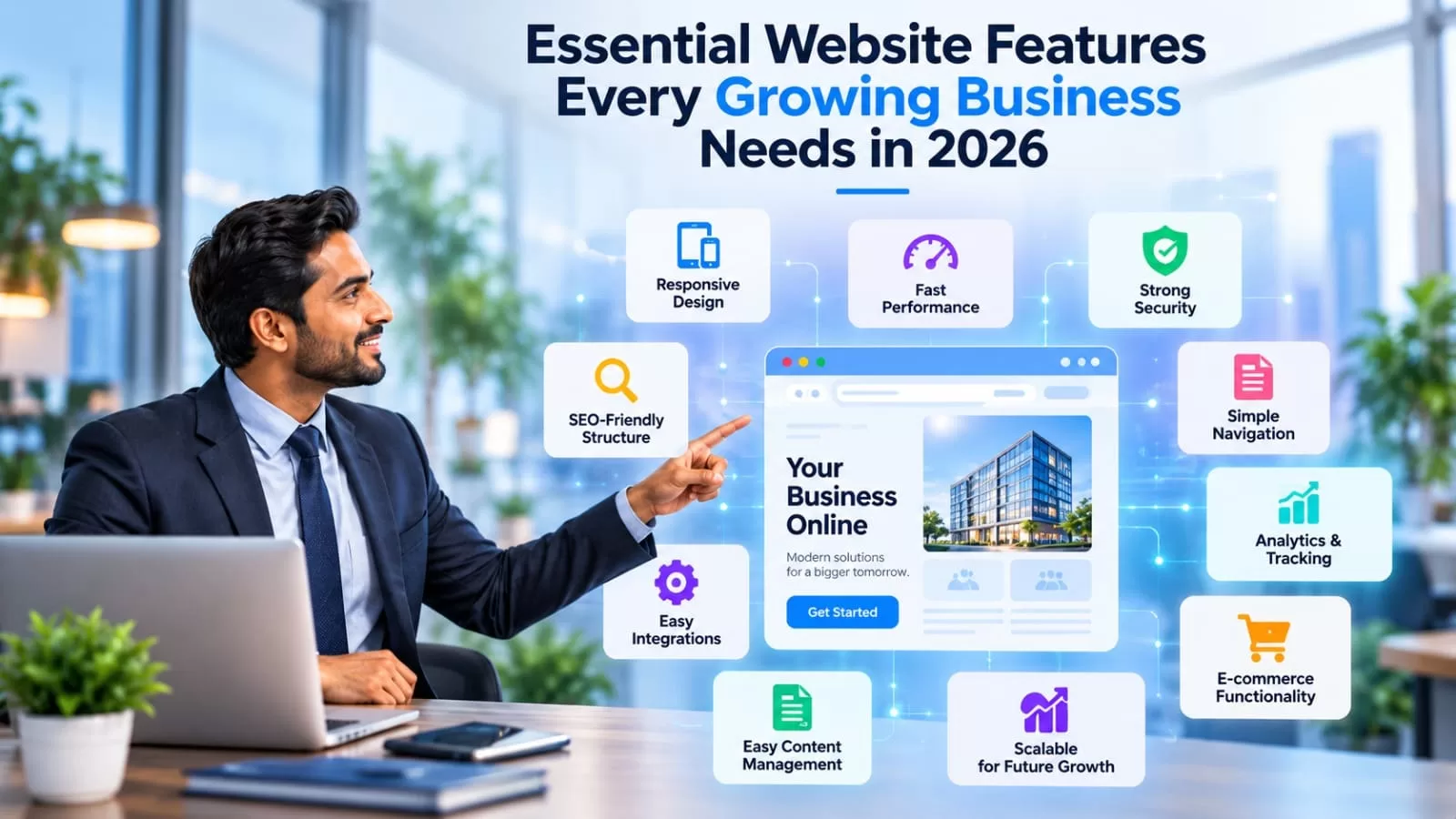
A growing business puts increasing pressure on its website. What may begin as a simple five-page site can eventually become a lead-generation platform, online shop, customer service channel and central part of the company’s marketing strategy.
As expectations change, businesses need websites that do more than look professional. They need platforms that are fast, secure, easy to navigate, mobile-friendly and capable of adapting as the organisation grows.
If you’re planning a new website or reviewing an existing one in 2026, these are some of the features worth prioritising.
1. Responsive Design Across Devices
Customers can discover a business from almost anywhere, often through a smartphone. A website therefore needs to work comfortably across mobiles, tablets and desktops.
Responsive design allows page layouts, images, menus and interactive elements to adjust according to screen size. However, good mobile design goes beyond shrinking desktop content.
Buttons should be easy to tap, forms should be simple to complete and important information should remain easy to access. Testing the actual user journey on different devices can reveal problems that aren’t obvious when viewing a website on a desktop.
2. Fast and Reliable Performance
People have little patience for slow websites.
Large images, excessive animations, unnecessary scripts, poorly configured plugins and inefficient code can all contribute to performance problems. For growing businesses, these issues can become more noticeable as the website gains content and functionality.
Performance should therefore be considered during development rather than left until after launch.
Image optimisation, caching, efficient code and suitable hosting can all contribute to a faster experience. Developers should also test important pages instead of assuming that the website performs equally well everywhere.
3. Simple, Logical Navigation
A growing business usually adds more information over time. New services, products, blog posts, locations and resources can quickly make navigation complicated.
A clear information architecture helps visitors understand where they are and where they should go next.
Important pages should not be buried several clicks deep. Menus should remain manageable, while related pages can be connected through contextual links.
Good navigation also makes it easier for search engines to understand the relationship between different sections of the website.
4. An Easy-to-Manage CMS
Businesses shouldn’t need a developer every time they want to update a paragraph or publish an article.
A suitable content management system allows authorised team members to manage everyday website content themselves. The right platform depends on the business and its requirements.
The key is to choose a system that provides enough flexibility without introducing unnecessary complexity.
5. Secure Enquiry and Contact Forms
For many businesses, the website’s primary purpose is generating enquiries.
A contact form should be short, clear and easy to complete. It should also be protected against spam and handled securely.
More importantly, businesses should think about what happens after submission. Connecting forms to a CRM or appropriate notification workflow can ensure that enquiries reach the right person quickly rather than sitting unnoticed in an inbox.
6. SEO-Friendly Technical Structure
A website needs to be accessible to search engines as well as customers.
Clean URLs, sensible site architecture, internal links, appropriate redirects, mobile optimisation and accessible content can create a stronger technical foundation for search visibility.
Structured data can also help search engines understand certain types of information when implemented appropriately.
Development teams don’t necessarily need to manage a complete SEO campaign, but SEO considerations should be discussed before the website is built.
7. Analytics and Conversion Tracking
Website traffic tells you how many people arrived. It doesn’t necessarily tell you what they achieved.
Analytics and conversion tracking can show businesses which channels generate valuable visitors and which actions those visitors take.
For a service company, useful conversions could include form submissions, phone calls or bookings. For an online store, the focus may include product views, cart activity and completed purchases.
Without this information, it becomes much harder to evaluate the commercial value of the website.
8. E-commerce Functionality
Businesses selling online need a smooth purchasing experience.
Depending on the business, an e-commerce website may require product search, filters, customer accounts, secure payments, shipping options, stock management and automated order notifications.
The checkout process deserves particular attention. Every unnecessary step can create another opportunity for a customer to abandon their purchase.
9. Integration With Other Business Tools
As a company grows, so does its collection of software.
The website may need to communicate with CRM platforms, accounting systems, email marketing software, payment gateways, booking systems or inventory tools.
Well-planned integrations can reduce duplicate data entry and make internal processes more efficient.
For example, a customer booking could automatically enter a CRM while sending a confirmation message to the customer and notification to the relevant team.
10. Strong Security and Backup Processes
Security should be built into the website rather than treated as an optional extra.
Businesses should understand how software updates, user permissions, authentication, backups and sensitive data will be handled.
A reliable backup system is particularly important. If something goes wrong, having a recent backup can make recovery considerably easier.
The exact security requirements will depend on the website’s functionality and the type of information it handles.
11. Accessibility
A website should be usable by people with different abilities and browsing preferences.
Clear headings, readable text, appropriate contrast, keyboard accessibility, descriptive labels and meaningful link text can make a website easier for a wider audience to use.
Accessibility improvements often benefit everyone. A clear interface is generally easier to navigate, regardless of who is using it.
12. Scalability for Future Growth
Perhaps the most important feature of a growing business website is the ability to change.
Today’s website may need only a handful of services. Tomorrow, the business might expand into new locations, launch an online store, introduce customer accounts or add multilingual functionality.
A scalable technical foundation makes these developments easier.
This doesn’t mean building every possible feature immediately. It means making development decisions that don’t unnecessarily restrict future options.
What Should Businesses Prioritise?
Not every business needs every feature.
A local trades business may gain more from excellent mobile performance, enquiry forms and local search foundations than from a complicated customer portal. An online retailer will have very different priorities around payments, stock and checkout.
The best approach is to identify the problems the website needs to solve first, then select technology and features around those requirements.
Think Beyond Launch Day
A website should be viewed as an evolving business asset rather than a finished product.
Once visitors begin using it, analytics can reveal where improvements are needed. Customer feedback can uncover confusing sections. New business requirements can create opportunities for additional functionality.
For businesses considering professional Web Development Services India, it is worth choosing a team that can think about performance, usability, security, SEO, integrations and future scalability alongside the visual design. A strong development partner should help turn these requirements into a practical website rather than simply delivering a collection of attractive pages.
The best website isn’t necessarily the one with the most features. It is the one where every important feature has a clear purpose, works reliably and contributes to a better experience for customers and the people running the business.
Related Posts
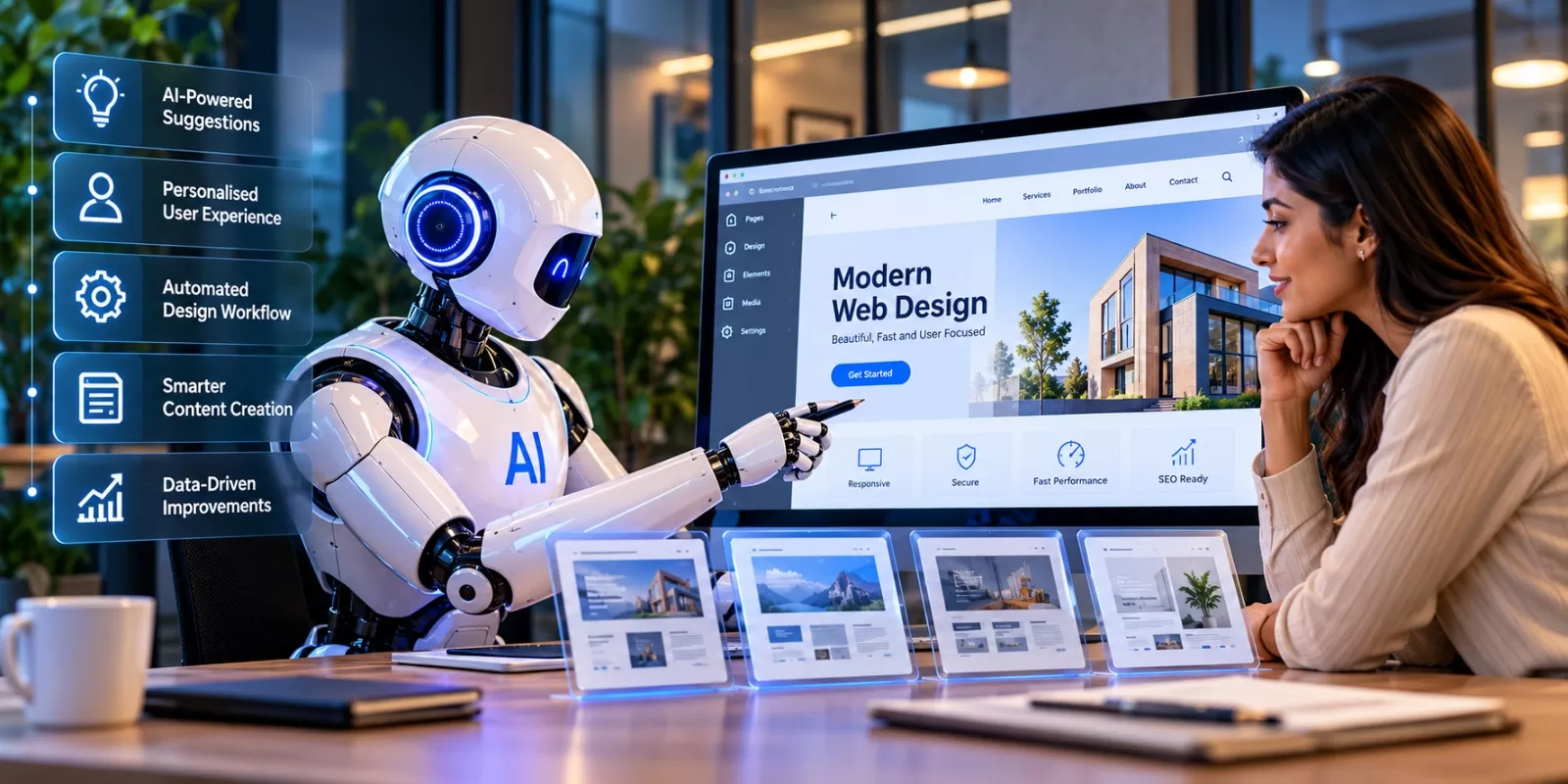
How AI and Automation Are Influencing Modern Web Design in India
Website design used to revolve mainly around colours, layouts, images and navigation. Those elements…

10 Benefits of Hiring a Professional Web Development Company in India
A business website needs to do more than look good. It should load quickly,…
Web Design Company India Shares Key Website Trends Shaping Indian Businesses
A business website used to be little more than an online brochure. Today, it…

Why Global Businesses Are Choosing Web Development Companies in India
A business can have a brilliant idea, strong branding and a great product, but…