


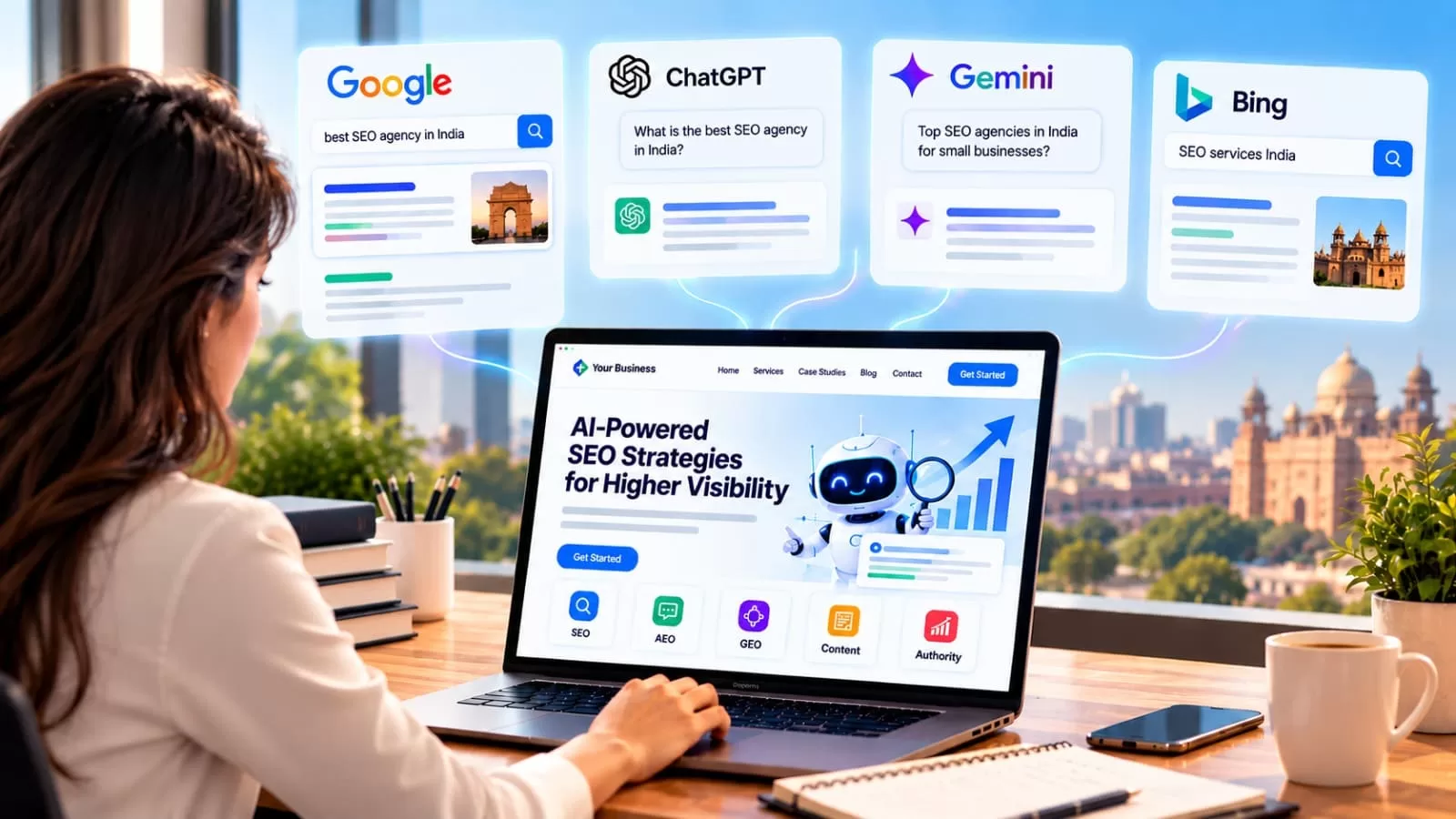
Search is becoming more conversational.
Instead of typing a short phrase into Google and scanning a list of links, people can now ask detailed questions and receive AI-generated responses that summarise information from multiple sources.
For businesses, this creates a new challenge: being visible is no longer only about achieving a traditional ranking.
Brands also need to make their information clear, useful and credible enough to be understood across modern search experiences.
This is where AI search optimisation is becoming an increasingly important part of SEO strategy.
A Best SEO Agency in India approach can combine traditional search optimisation with strategies designed to support AI-powered discovery.
What Has Changed About Search?
Imagine someone searching for a digital marketing agency.
A traditional search might look like:
“SEO company India”
A conversational search could be:
“What should a small business look for when choosing an SEO agency in India?”
The second query contains much more context.
Search systems need to understand the intent behind the question and identify information that can provide a useful answer.
This makes comprehensive, clearly structured content increasingly valuable.
Start With Search Intent
AI search optimisation shouldn’t begin with trying to predict an algorithm.
It should begin with the customer.
What questions do they ask before purchasing? What problems are they trying to solve? What comparisons do they make? What information do they need before contacting a business?
These questions can become the foundation for content.
A business selling accounting software, for example, could create resources covering pricing considerations, features, implementation, integrations and common mistakes.
This provides much more context than repeatedly publishing short pages targeting individual keywords.
Build Topic Depth
One article rarely demonstrates expertise on an entire subject.
Businesses can develop a connected collection of useful resources around important topics.
A website focused on SEO might have detailed content covering technical SEO, local SEO, content optimisation, link building, analytics and AI search.
These pages can be linked together logically, helping visitors explore the subject while creating a clearer topical structure.
Make Important Information Easy to Understand
AI systems need to interpret information.
Clear headings, descriptive sections, concise answers, tables where appropriate and logically organised content can make complex subjects easier to process.
This also improves the human reading experience.
The best optimisation often doesn’t look like optimisation at all. It simply feels like a well-organised answer.
Add Original Expertise
Generic content is becoming easier to produce.
That means originality can become a competitive advantage.
Businesses should consider adding expert opinions, original research, case examples, practical observations, unique data and genuine experience to their content.
For example, instead of publishing another generic article about improving website conversions, a business could explain common conversion problems it encounters, what causes them and how different approaches perform in different situations.
That kind of information is harder to replicate.
Don’t Abandon Traditional SEO
AI search doesn’t make traditional SEO irrelevant.
Technical accessibility, crawlability, internal linking, website structure, relevant content and authority remain important parts of a healthy website.
AI optimisation should therefore be treated as an extension of a broader SEO strategy.
A technically poor website cannot be rescued simply by adding an AI-focused blog section.
Think About Brand Mentions Beyond Your Website
AI-powered search can draw from information available across the wider web.
This makes brand consistency important.
Businesses should make sure their company information, expertise, services and important facts are represented accurately across relevant platforms.
Digital PR, industry publications, reputable directories and other relevant sources can contribute to a broader online presence.
The goal isn’t to create mentions everywhere. Relevance and credibility matter more than volume.
Structure Content Around Real Questions
One practical way to prepare for AI search is to look at the questions customers ask sales teams, support staff and customer service representatives.
These questions often reveal content opportunities that keyword research alone may miss.
If customers repeatedly ask, “How long does this process take?” or “What should I prepare before starting?”, those questions deserve useful answers.
The result is content that serves an actual business need rather than content created simply because a keyword has search volume.
Measure Visibility Differently
Traditional SEO reporting often focuses on rankings and organic traffic.
Those metrics still matter, but businesses may increasingly need to consider how their brand appears in AI-powered search experiences.
Tracking branded searches, referral traffic, conversions, important content performance and visibility across different search environments can provide a broader picture.
AI search is still evolving, so businesses should avoid chasing unverified ranking tricks.
The Future Is About Being Useful
There is no shortcut that guarantees an AI system will mention a particular business.
The more sustainable approach is to create a website that clearly explains what the business does, demonstrates genuine expertise and provides information customers actually need.
Traditional SEO provides the foundation. Strong content builds relevance. Authority strengthens credibility. AI search optimisation helps businesses consider how that information can work within newer discovery experiences.
For businesses planning their digital strategy beyond 2026, the objective should not simply be to “optimise for AI”.
It should be to become a useful, credible and recognisable source of information wherever potential customers choose to search.
Related Posts
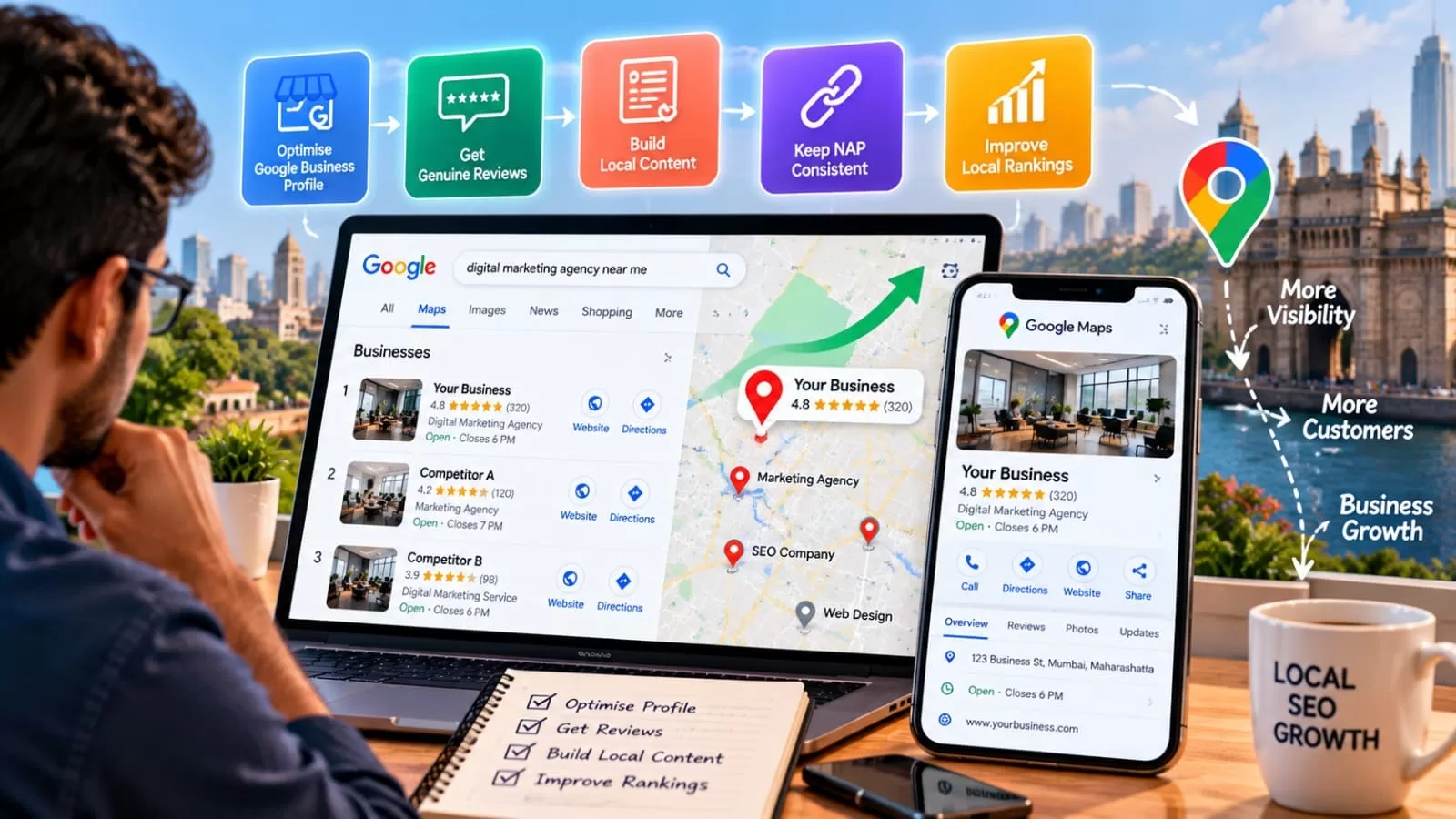
How a Local SEO Company in India Can Improve Google Maps Rankings
When someone searches for a nearby restaurant, dentist, electrician or marketing agency, they often…

Do-Follow Business Listing Sites in the USA for Better Search Visibility
Getting a business mentioned across the web still matters, but successful off-page SEO is…

Best Do-Follow India Listing Sites for SEO and Backlinks
Introduction Building a strong online presence requires more than just creating a website and…
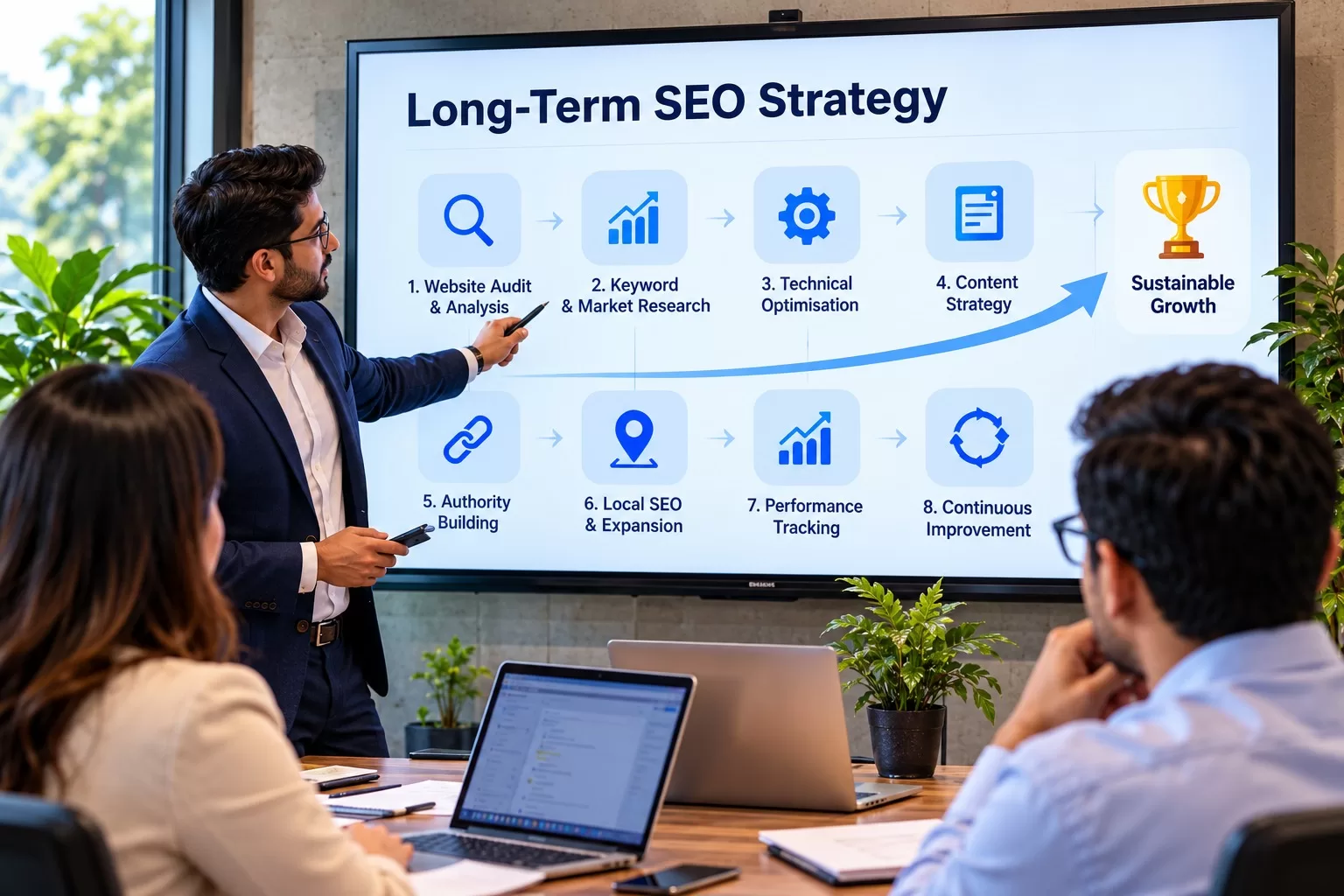
How the Best SEO Agency in India Builds a Long-Term SEO Strategy
SEO can sometimes look like a collection of individual tasks. One page needs optimisation,…